




.png)

WORK WITHOUT LIMITS.
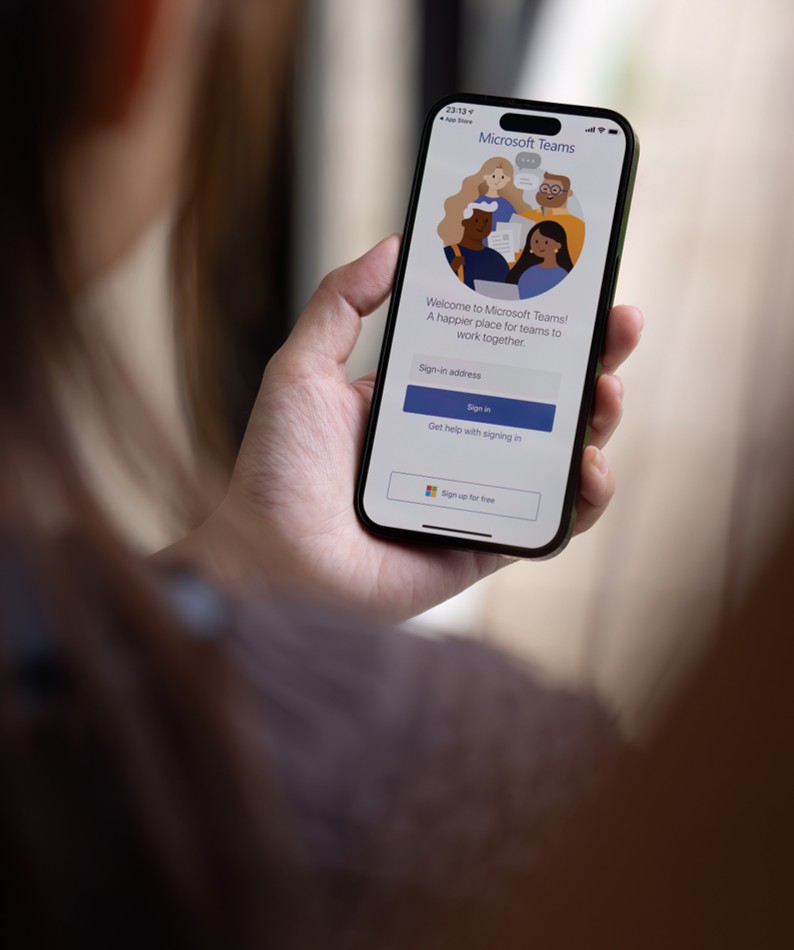
Microsoft has converged UCaaS and CCaaS in Teams. For UK businesses, that means sorting proper PSTN calling and business messaging including WhatsApp, before the gap shows up in your customer experience.
Microsoft has spent the last 18months quietly closing the gap between collaboration and customer service. InJuly 2026, that work reached a milestone: Microsoft completed a major move to converge UCaaS and CCaaS within Microsoft Teams, according to CX Today. What this means in plain terms: Teams is no longer just the place your team meets and chats. It's becoming the platform businesses use to manage customer calls, omnichannel queues, and agent workflows alongside internal communications, all in one place.
For UK businesses, this is a significant shift. But it also exposes a gap many Teams deployments already have: Teams can only do this well if you have proper PSTN calling and business messaging set up first. If your organisation is still routing calls through alegacy PBX, or texting and messaging customers from personal phones, you're not ready to get the most from where Teams is heading and your customers will notice.
UCaaS (Unified Communications as aService) covers the tools your team uses internally calls, meetings, chat, filesharing. CCaaS (Contact Centre as a Service) covers customer-facing communications: inbound call queues, agent routing, IVR, omnichannel messaging.
Until recently, these were separate systems. A business might run Teams for internal comms and a completely different platform, like a third-party contact centre, for customer interactions. Integration between the two was possible but clunky.
Microsoft's move closes that gap. Teams Phone Extensibility now lets contact centre platforms share the same voice infrastructure as Teams, so agents can transfer calls to colleagues using Teams without leaving the contact centre interface. The lines between "my team's communications" and "our customer service platform" are fading.
The analyst firm Metrigy found that 72% of SMBs currently using Microsoft Teams plan to maintain their existing calling services, meaning most small and mid-size businesses aren't abandoning Teams, they're building on it. That makes the underlying calling and messaging setup more important, not less.
Teams is excellent for internal collaboration out of the box. But there are two things it does not provide natively that businesses need to serve customers well:
• PSTN calling: Teams can host meetings and internal calls, but connecting to the public telephone network, so your customers can call a business number and reach you in Teams requires either Microsoft Calling Plans, Direct Routing, or Operator Connect. Most businesses that rolled out Teams during remote-work adoption never fully sorted this out.
• Business messaging: Teams has no native SMS capability. If your team is texting customers, they're doing it from personal phones. Which means nomessage history, no compliance records, and no way to manage opt-outs properly under PECR.
As Teams evolves into a platform that can handle customer-facing communications, these gaps become more visible. A contact centre workflow built on Teams still needs proper PSTN voice and compliant business messaging to function the way it should.
The two most common ways to add PSTN calling to Microsoft Teams for UK businesses are Direct Routing and Operator Connect. Both route real telephone calls into and out of Teams but they work differently.
Direct Routing connects your own Session Border Controller (SBC) to Teams. It gives you flexibility and control, but it's technically complex. Ifyou ran the Direct Routing route in 2024 or early 2025, you may also have been caught by Microsoft's certificate authority rotation in June 2026 the change that caused hard TLS failures for unpatched SBCs. Managing Direct Routing means staying on top of Microsoft's infrastructure changes.
Operator Connect is a simpler path: your telephony provider connects directly to Microsoft's network without you managing an SBC. Calls are made and received inside Teams, billing is consolidated, and Microsoft infrastructure changes are managed by the operator rather than your IT team.
Mobex Operator Connect gives UK businesses a managed route to proper Teams PSTN calling keeping your existing business numbers and giving you full call management inside the Teams interface you're already using.
As Teams become more central to customer communications, business messaging becomes part of the same conversation. UK customer sincreasingly expect to reach businesses by text and by WhatsApp, not just by phone.
Mobex text messaging brings SMS capability into your Teams environment, so your team can send and receive business text messages from the same platform they use for calls. Conversations are logged against the business number, message history stays with the company even when staff change, and opt-in/opt-out handling keeps you on the right side of PECR.
For UK businesses, WhatsApp also belongs in this picture. WhatsApp has over 30 million business users in the UK and is often the channel customers prefer for quick queries. But WhatsApp for business needs to be managed correctly: under PECR, sending promotional messages without explicit opt-in consent is a breach , even if you have a GDPR lawful basis and the Data (Use and Access) Act 2025 raised maximum penalties to £17.5m or 4% of global turnover.
Mobex supports WhatsApp within the Microsoft Teams environment, so businesses can handle WhatsApp conversations through the same managed, compliant platform as their SMS and voice communications not through individual personal phones with no audit trail.
The more Teams becomes the hub for customer-facing as well as internal communication, the more important it is that the underlying infrastructure is properly set up and managed.
When your calling, SMS, and WhatsApp are all running through managed, integrated providers rather than a patchwork of personal phones and consumer apps:
• Continuity: Conversations don't disappear when a member of staff leaves.
• Compliance: Consent records, opt-out requests, and message logs are centralised.
• Visibility: Management can see what's being communicated with customers across every channel.
• Consistency: Customers reach a business number, not someone's personal mobile.
This is what Mobex does: managed business calling and messaging that works inside Microsoft Teams, without the complexity of cobbling together separate systems or relying on personal devices.
Do I need Operator Connect or Direct Routing for Teams calling in the UK?
Both work, but they suit different situations. Direct Routing gives you more control but requires managing your own SBC and staying current on Microsoft infrastructure changes. Operator Connect is simpler and more managed — your telephony provider handles the connection to Microsoft's network directly. For most UK SMBs, Operator Connect is the cleaner option.
Can my team receive and send WhatsApp messages through Microsoft Teams?
Yes, with the right provider. Mobex supports WhatsApp messaging within the Teams environment, so staff can handle WhatsApp conversations in Teams rather than on personal phones. This keeps conversations auditable, compliant with PECR consent requirements, and tied to the business rather than an individual's device.
What is Microsoft Teams Operator Connect?
Teams Operator Connect is a Microsoft programme that allows certified operators— like Mobex to provide PSTN calling directly to Teams users without requiring a Session Border Controller. UK businesses can make and receive calls from their existing business numbers inside Teams, without complex SBC management.
Is it a breach of PECR to use WhatsApp for business messaging?
Using WhatsApp for business messaging is not a breach, but sending promotional messages without explicit opt-in consent is a breach of PECR even with a GDPR lawful basis. Every message must also include an opt-out mechanism. Using WhatsApp through a managed platform like Mobex, with proper consent records and opt-out handling built in, is the correct approach.
What is UCaaS and CCaaS, and why does the convergence matter for UK businesses?
UCaaS covers internal business communications (calls, chat, video). CCaaS covers customer-facing communications (call queues, IVR agent routing). Microsoft's convergence means Teams is evolving to handle both. For UK businesses, this makes a properly set-up Teams environment — with real PSTN calling and compliant business messaging — more important, not less.
If your team is already in Teams but your calling or messaging hasn't caught up, now is the right time to sort it. Mobex provides Microsoft Teams Operator Connect, business text messaging, and WhatsApp integration for UK businesses managed, compliant, and built to work alongside your existing Teams environment.
.png)
.png)

.png)

